

If your e-bike loses assistance or its battery display drops sharply halfway through a freezing commute, start by checking battery temperature. Cold can temporarily reduce available power and range; keeping the battery indoors, charging it only when it is ready, and planning from your own winter rides can reduce surprises.
At a glance
| When | Do this |
|---|---|
| Before riding | Store a removable battery indoors and fit it shortly before departure. |
| During the commute | Ride smoothly, check tyre pressure, and leave a reserve for the return trip. |
| At work | Bring the battery inside when workplace rules allow. |
| After riding | Let a cold battery warm and dry before charging; use its manual for limits. |
This guide focuses on battery performance and charging; general brake, drivetrain, and wet-weather checks are outside its scope.
1. Pre-Ride Warm Starts for Your E-Bike Battery in Winter
A warm battery usually performs more consistently at the start of a freezing commute than one left outside overnight. Cold temperatures can reduce the power and energy available from a lithium-ion battery for the moment, so the display may fall faster under acceleration or a hill. It does not mean every cold-weather range loss is permanent; performance may improve after the pack warms, while the exact result depends on the battery design and conditions.
If your battery is removable, store it indoors in a dry place and fit it shortly before setting off. Follow the instructions supplied with your battery, since temperature limits and handling steps can differ by manufacturer.
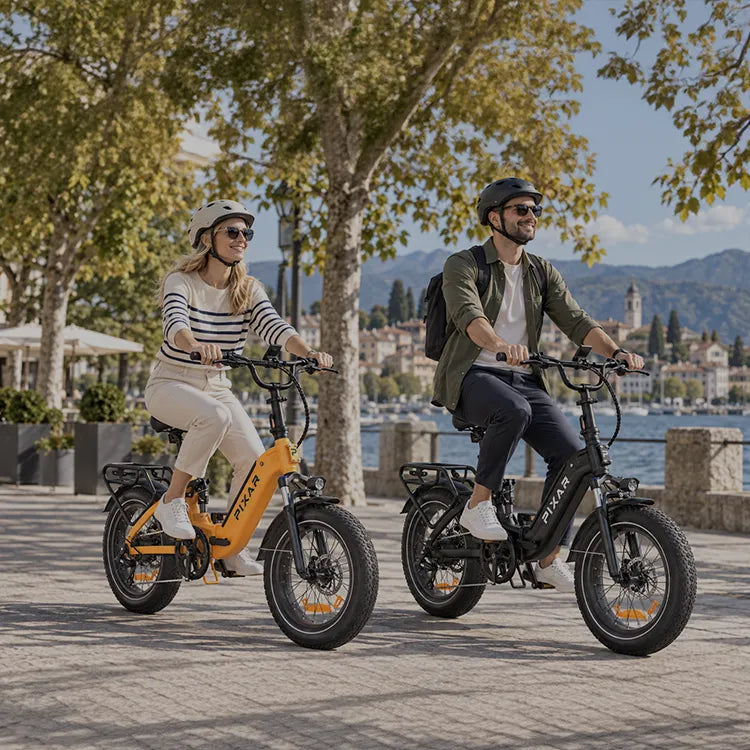
PIXAR C1, PIXAR C1 Pro, PIXAR Cruiser, and PIXAR Rusher are listed with removable batteries, which can make indoor storage practical without bringing the whole bike inside. Store the pack away from radiators and direct heaters; gradual warming indoors is the useful step, not rapid heating.
Before you leave
- Fit and lock the battery according to the bike manual.
- Check the charge level and plan the return trip with a reserve.
- Do not ride or charge a battery that is wet, visibly damaged, swollen, unusually hot, or showing an error; ask the manufacturer or a qualified service provider for advice.

2. Shielding Cells with an E-Bike Battery Thermal Cover
An e-bike battery thermal cover can shield the pack from direct cold airflow on longer rides below freezing. A cover is an added layer, not a temperature controller: it cannot guarantee a particular battery temperature or range increase.
Check the fit before buying:
- Match the cover to the battery’s shape and mounting position.
- Keep the lock, cables, lights, and removal points accessible.
- Avoid loose material that can shift toward moving parts or hide battery damage.
After a wet or slushy ride, remove or open the cover when practical and inspect the battery and contacts. Wipe away surface water with a clean, dry cloth and let the components dry according to the manufacturer’s care instructions. Do not charge a wet battery or use a heater to dry it. If moisture has entered the battery or connector area, get advice before use.
A thermal cover is most useful as part of a routine: start with a battery stored indoors, use a suitable cover for the cold ride, then take the removable battery inside again at your destination. The cover slows exposure; it does not replace appropriate storage or safe charging.
3. Maintaining Tire Pressure to Reduce Cold Rolling Resistance
Cold-weather tyre pressure deserves a gauge check: temperature changes can affect pressure, and underinflated tyres can make pedalling harder. The amount varies by tyre and starting conditions, so use the fitted tyre’s limits rather than a one-size winter adjustment.
Measure when the tyres are cold and stay within the range printed on the fitted tyre and specified for the wheel. Do not automatically inflate to the maximum; load, tyre width, and road surface affect the useful setting. PIXAR’s tyre-pressure guide explains how to read the sidewall and adjust within the permitted range.
| What you notice | What to do |
|---|---|
| The bike feels sluggish on a familiar route | Measure both tyres with a gauge. |
| The bike feels vague or unstable | Stop and inspect pressure, tread, and sidewalls before continuing. |
| Temperature has changed sharply or you repaired a puncture | Recheck pressure before the next ride. |
For a daily commuter, a weekly gauge check is a reasonable starting point; adjust the frequency if your tyres lose air faster.
Correct pressure cannot cancel the effect of cold on a battery, but it removes one avoidable source of extra effort. Also inspect the tread and sidewalls; winter debris, glass, and road damage can create problems that a pressure adjustment will not solve.

4. Cadence and Assist Tactics for Smooth Winter Riding
Use smooth pedalling and moderate assistance to avoid unnecessary high-demand bursts from a cold battery. A sudden full-power start or a long, steep climb can increase load, and some systems may reduce assistance or show a battery warning.
On the road
- Shift to an easier gear before stopping.
- Build speed with steady pedal input instead of a full-power launch.
- Choose an assist level that feels controlled on your route, then ease off if the system warns or cuts assistance.
There is no universal cadence or assist setting for every motor, battery, rider, or route; use the system manual as your limit.
Do not try to warm the battery by deliberately using the motor at high power. Battery heating under load is not a reliable temperature-control method, and high demand can reduce available range or trigger protection. If assistance cuts out, ease off, stop somewhere safe, and check the display and manual rather than repeatedly demanding maximum output.
Smooth riding also helps with traction. In freezing rain, snow, or slush, lower assistance at starts and corners if the rear wheel slips. Battery range matters, but staying in control on a low-grip surface matters more than preserving a particular commute time.
5. Can You Leave an E-Bike Battery at Work in Winter?
A removable battery left in an unheated rack all day may be cold again by the evening commute. Because cold can reduce available power or energy, the morning ride does not tell you exactly how the same route will feel after hours outside.
If workplace rules allow it, take the battery indoors and store it in a dry place away from heat sources. Check the battery manual and your workplace rules before bringing a pack inside.
The desk habit
- Remove and carry the pack using its handle, if provided.
- Keep it dry and away from heaters, exits, and combustible materials.
- Do not drop, strike, or leave it where it can be knocked over.
If you cannot bring the battery inside, allow for a colder start when planning the return journey. Keep enough reserve to take a shorter route or use less assistance, and do not assume that a displayed percentage will translate into the same distance as it would in mild weather.
6. Critical Rules for Charging E-Bike Battery in Cold Weather
Do not charge a battery that is still cold from a freezing ride. Bring it into a dry indoor area, let it warm gradually, and follow the battery maker’s charging temperature limits.
Charging a cold lithium-ion battery outside its permitted temperature range can damage the cells. The exact limit depends on the battery design, which is why a universal temperature cutoff or a guaranteed damage percentage is not appropriate for every e-bike.
Safe charging sequence
- Bring the battery indoors and inspect the case and contacts.
- If it is wet, let it dry fully. Do not plug in a wet pack.
- Wait until it reaches the charging temperature stated in its manual. There is no universal waiting time; pack size, starting temperature, and room conditions differ.
- Use the supplied or manufacturer-approved charger on a dry, stable surface.
If the battery has been dropped, punctured, swollen, unusually hot, or exposed to water, do not charge it until a qualified service provider has checked it.
7. How to Calculate Realistic E-Bike Battery Winter Range for Commuting
Estimate e-bike battery winter range from your own comparable rides, not a fixed seasonal discount. Temperature, wind, hills, tyre pressure, surface, carried load, assistance, and stop-start traffic all affect energy use. A manufacturer’s maximum range is not a promise for a cold commute; PIXAR’s range guide explains the other factors to compare.
For a first-pass estimate, divide the distance of a familiar route by the share of battery used on that ride:
Rough route-equivalent range = distance ridden ÷ (battery percentage points used ÷ 100)
Example: A 24 km round trip starts at 90% and ends at 54%, using 36 percentage points. The rough calculation is 24 ÷ 0.36, or about 67 km on the same pattern of riding.
Treat 67 km as a comparison estimate, not a safe winter range. A battery display is not a perfectly linear measure of usable energy, and wind, temperature, hills, load, and assistance can change between rides. Repeat the same route several times and record the conditions before using the estimate to plan.
When readings vary, base your plan on the less favorable comparable rides rather than the best result. Leave charge for a detour or a change in weather; if your route would use most of the available battery, shorten it or arrange a charging stop.
PIXAR C1 Pro is listed with a 36V 18Ah Samsung battery and an official stated maximum range of up to 150 km. PIXAR Rusher is listed with a 48V 12.8Ah Samsung battery and an official stated maximum range of up to 120 km. Those figures are not winter route predictions; actual distance varies with riding conditions, temperature, assistance, and load. Compare battery capacity and your observed use, not the maximum-range figure alone.
8. Safe Practices for E-Bike Battery Winter Storage Between Rides
For longer periods without riding, store the battery in a dry place and follow its manual for charge level and temperature. If the manual specifies a partial charge for storage, use its stated target rather than applying another battery brand’s range.
Storage checklist
- Avoid leaving the pack fully depleted for an extended period.
- Use the storage charge level and temperature in the battery manual.
- Keep the battery dry, away from direct heat and combustible materials.
- Check it periodically during a long break and top it up only as directed.
- Store it where children and pets cannot reach it.
Before using the battery again, inspect the case and contacts and confirm the pack is seated correctly. If it has been stored for months, shows damage, or will not charge normally, consult the manufacturer or a qualified e-bike service provider rather than attempting a repair yourself.
Frequently Asked Questions
Does sub-zero weather permanently ruin an e-bike battery?
No, cold weather can temporarily reduce the energy or power available from a lithium-ion battery, and performance may improve after the battery warms. The amount varies by battery and conditions. Repeated operation or charging outside the manufacturer’s permitted limits can cause lasting damage, so follow the manual.
How long should I wait before charging an e-bike battery after riding in the cold?
There is no universal waiting time. Bring the battery into a dry indoor space, check for moisture, and wait until it reaches the charging temperature specified in its manual before connecting the correct charger.
Should I use Eco mode or higher assist modes in freezing weather?
Choose an assist level that allows smooth, controlled riding without repeated high-power starts. Lower assistance can help extend range, but the best setting depends on the route and system. Reduce power further if the tyre slips on snow, ice, or slush.
Can road salt and winter slush damage my e-bike battery connections?
Salt and moisture can corrode metal contacts over time. Follow the bike manual for cleaning, wipe away surface dirt with an appropriate cloth, and let the battery and connection area dry before charging. Do not use a high-pressure jet or abrasive cleaner around electrical contacts.
Final Words
Cold-weather battery performance is easier to manage when you store the pack indoors, fit it shortly before departure, and charge only when it is dry and within its permitted temperature range. Check tyres, ride smoothly, and plan from your own winter commute rather than a summer maximum. These habits cannot guarantee a fixed distance, but they give you a clearer routine and a more realistic reserve.