

Two electric bikes with similar motors and batteries can feel completely different from the first pedal stroke. Much of that difference comes from the sensor that tells the motor when and how to assist.
Torque and cadence sensors read your pedalling in different ways. One responds to pressure; the other responds to rotation. That changes how the bike starts, climbs and behaves at low speed.

What does an electric bike sensor do?
The sensor sends information to the controller, which adjusts the motor within the assistance level you have selected.
A cadence sensor detects crank rotation. A torque sensor measures the pressure applied through the pedals. Some electric bikes also list a speed sensor, which monitors movement or wheel speed. A speed sensor is not necessarily the same component as a cadence sensor, so the terms should not be used interchangeably unless the manufacturer confirms the system design.
How a cadence sensor feels
A cadence sensor looks for pedal rotation. Once the cranks begin to turn, the controller provides assistance according to the selected level. You do not usually need to push hard on the pedals to receive stronger help.
The system is simple to use: select an assistance level and keep the pedals moving. It works well for riders who want predictable support without pressing hard.
The downside is a response that can feel less connected to your own effort. Assistance may start or stop with a short delay, and the motor may react similarly whether you are pressing lightly or firmly.
How a torque sensor feels
A torque sensor measures how hard you press on the pedals. Push harder and the motor adds support; ease off and it reduces. The sensation is closer to riding a conventional bicycle with stronger legs.
That response helps when starting on a slope, riding slowly or adjusting effort through a bend. It also means you must apply some pressure to ask for more help. If you prefer substantial support with very light pedalling, a cadence system may feel more relaxed.
Torque sensor vs cadence sensor
| Feature | Torque sensor | Cadence sensor |
|---|---|---|
| What it detects | Pedalling force | Crank rotation |
| Motor response | Changes with rider effort | Follows the selected assistance level |
| Riding feel | Natural and progressive | Consistent and easy to understand |
| Low speed control | Usually more precise | May engage more abruptly |
Where the difference matters most
Hills
A properly calibrated torque sensor responds as you press harder on a changing gradient. A cadence system can climb just as effectively when the motor and gearing are suitable, but you may need to select more assistance or shift earlier. The difference is control, not necessarily motor power.
Battery use
A torque sensor can help some riders use energy gradually because motor output follows pedal effort, but it does not guarantee more range. Battery capacity, terrain, speed, temperature, weight and tyre pressure still have a greater influence. The sensor changes how assistance arrives, not how much energy the battery stores.
Everyday riding
Torque sensing suits riders who enjoy pedalling and want precise control on varied ground. Cadence sensing is often more comfortable for relaxed city riding or for anyone who wants support without applying much pressure. Calibration matters as much as the label on the specification sheet.
Starting and stopping in city traffic
Sensor behaviour is easiest to notice at junctions, traffic lights and tight turns. A torque sensor begins responding as pressure builds on the pedal, which can make a controlled start feel intuitive. The amount of help changes as you press harder or ease off.
A cadence sensor needs to detect rotation before it can request assistance. Depending on the design, this may mean part of a crank turn before the motor joins in. Once active, the support can feel stronger and more constant. Some riders enjoy that clear push; others prefer a softer response when moving through crowded streets.
Motor cut off timing matters too. Assistance should stop promptly when you stop pedalling or use a brake lever fitted with a motor cut off signal. This is one reason to judge the complete system rather than choosing from the sensor name alone.
Why two torque sensor bikes may still feel different
The sensor supplies information, but the controller decides what to do with it. Software calibration determines how quickly assistance begins, how strongly each level responds and how smoothly the motor reduces power.
Motor type, gearing, bike weight and tyre choice also shape the result. A torque sensor on a heavy touring bike will not feel identical to one on a light city bike. Likewise, a well calibrated cadence system can feel smoother than a poorly tuned torque system.
When comparing bikes, look beyond the sensor label. Check whether the lowest assistance level is gentle enough for slow riding, whether the motor remains predictable on a climb and whether assistance stops without an uncomfortable surge.
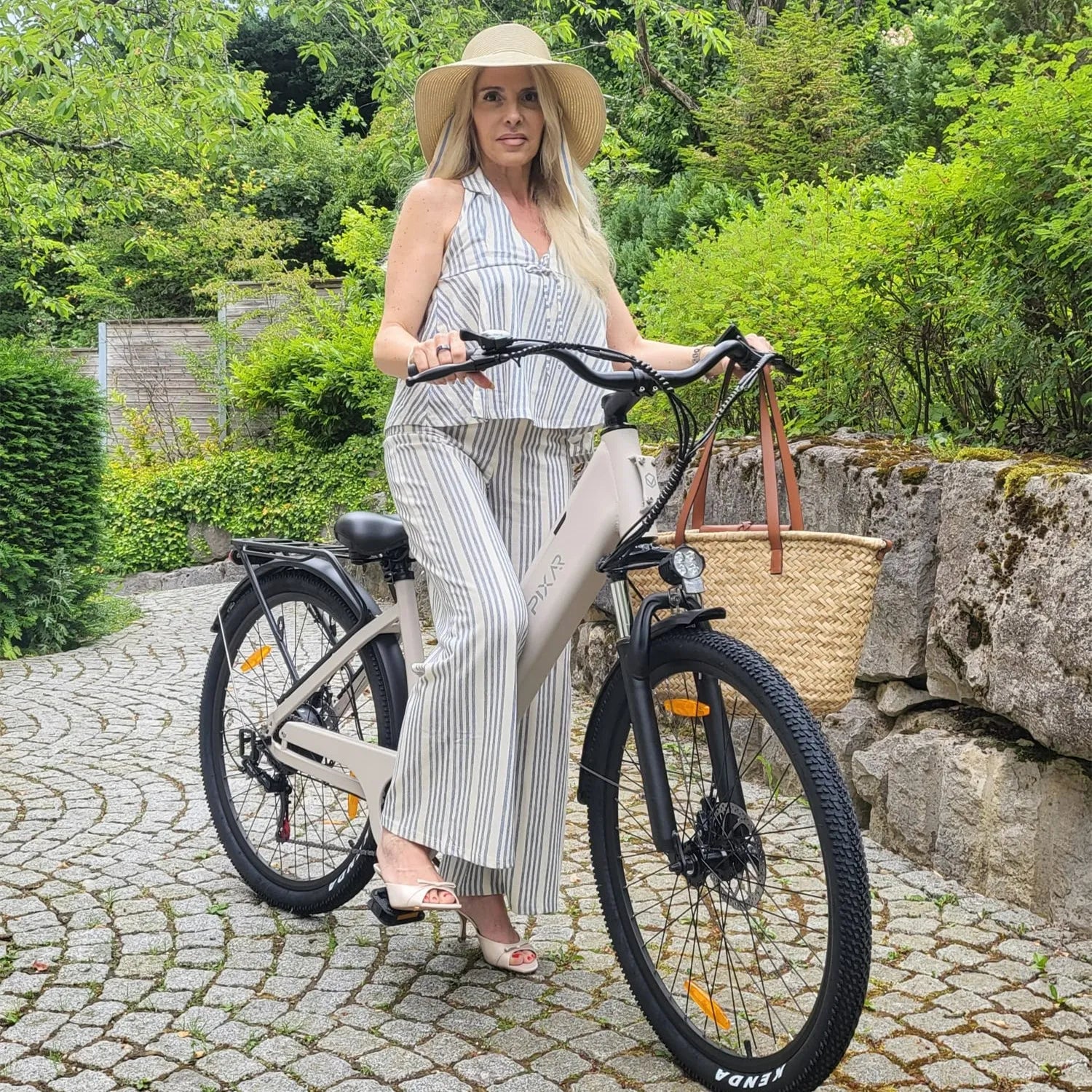
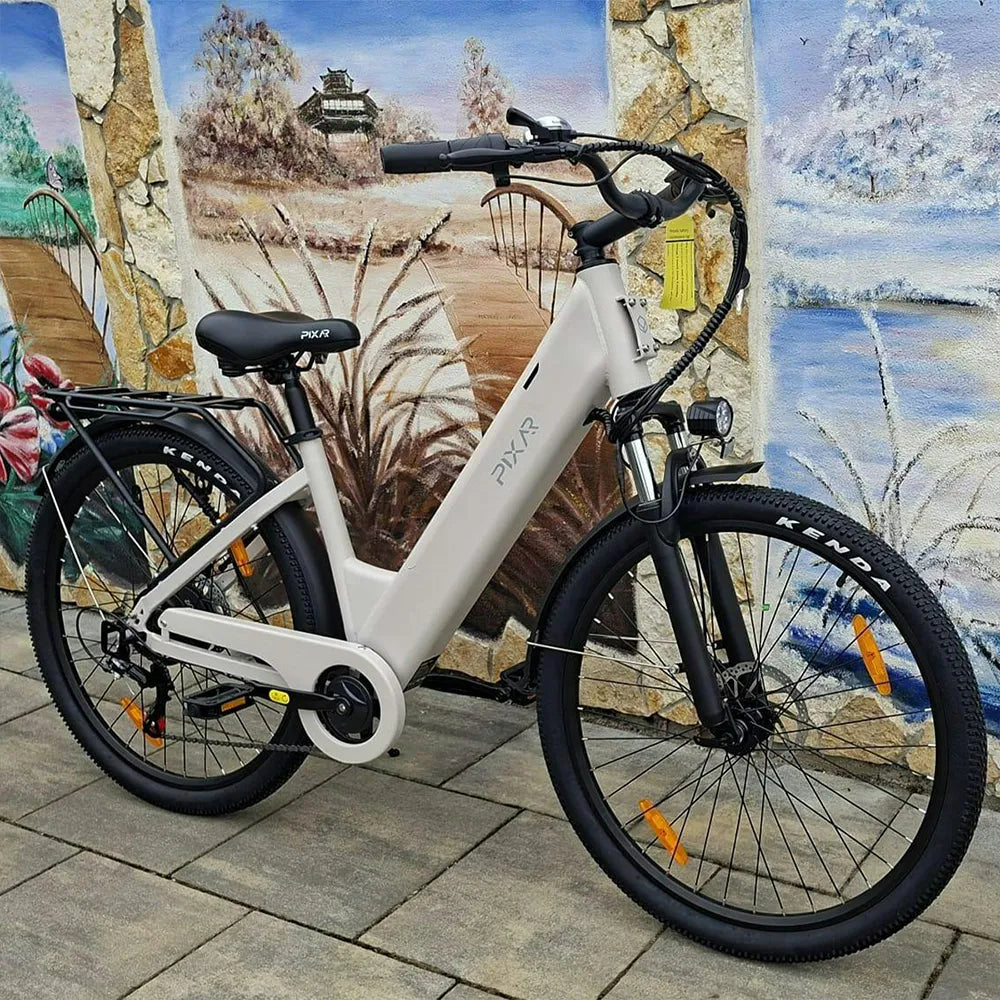
The PIXAR Largo pairs a BAFANG 250 W motor with a torque sensor. Its assistance responds to pedal pressure, a useful characteristic for touring, climbs and mixed surfaces. For other PIXAR models, check the current specification table rather than assuming that every listed speed sensor is a cadence sensor.
Try the response before deciding
If you can take a test ride, begin with the lowest assistance level rather than the most powerful one. Start on level ground, ride at walking pace, stop pedalling and begin again. Then repeat the test on a gentle incline.
Pay attention to three moments: the delay before the motor starts, the way power builds and how quickly it stops. Try a tight turn at low speed and change assistance levels while riding. The system should remain predictable without forcing you to change your normal pedalling rhythm.
If a test ride is not available, look for details beyond the headline specification. A useful product page should identify the sensor type, motor, assistance levels and gearing. Reviews that describe starts, slow riding and hills are more informative than comments that only call a motor powerful.
Compare PIXAR electric bikes by sensor, battery, weight and intended use before deciding which assistance system fits your regular journeys.
Frequently asked questions
Can an electric bike have both torque and cadence sensing?
Yes. Some drive systems combine more than one signal. Check the manufacturer’s technical specification because the way these inputs are used varies by controller and motor system.
Is a speed sensor the same as a cadence sensor?
Not necessarily. A speed sensor measures movement or wheel speed, while a cadence sensor detects crank rotation. Product terminology can vary, so confirm the actual sensing method before comparing bikes.
Does a torque sensor require more maintenance?
It does not normally add a separate routine maintenance task for the rider. Keep the bike clean, avoid directing high pressure water at electrical components and follow the service guidance supplied with the bike. If assistance becomes inconsistent, a technician may need to check the sensor, wiring or controller.