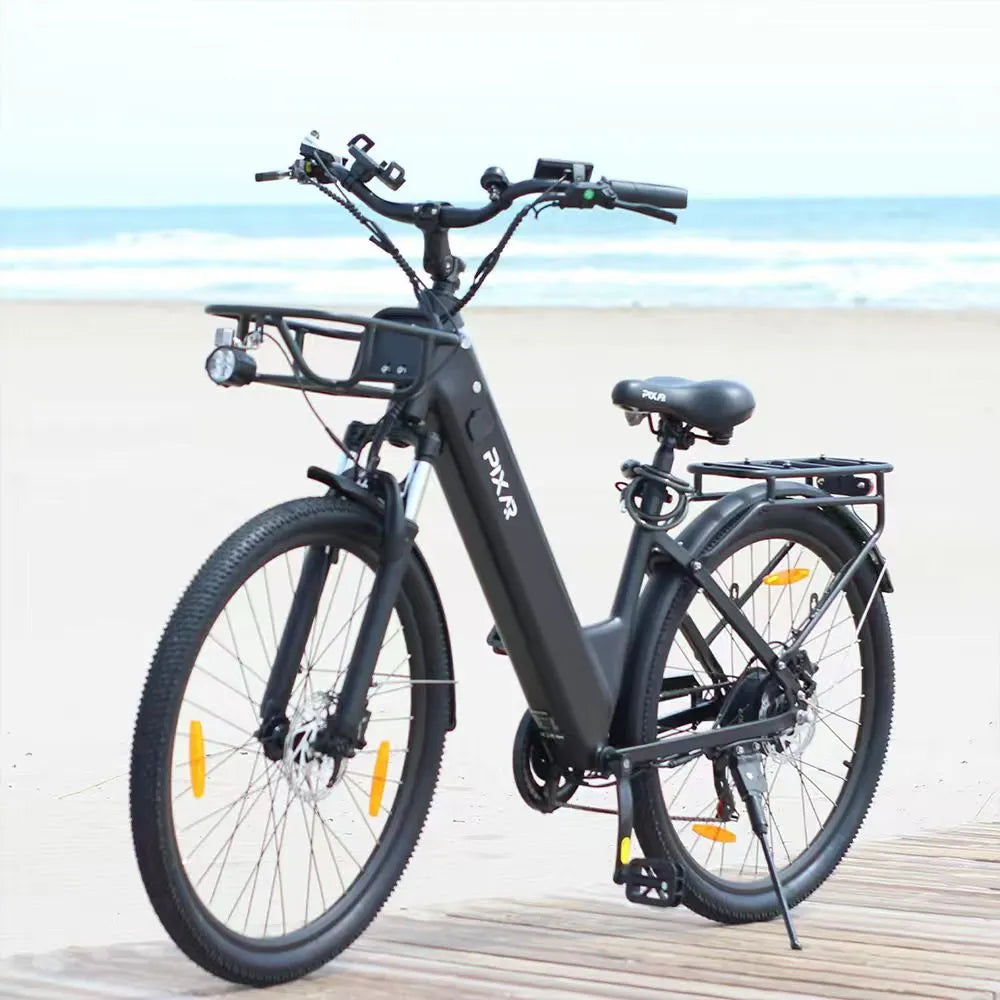


A shower starts halfway through your journey. Do you keep riding, or will the rain damage the battery and motor?
For an electric bike designed for outdoor use, ordinary rain is normally part of the job. The important distinction is between rain resistance and unlimited waterproofing. Wet roads and a passing shower are not the same as deep water, pressure washing or leaving the bike exposed for days.
Before riding, check the manual and the protection information for your exact model. Different parts of the same electric bike can have different ratings.
Can you ride an electric bike in the rain?
In normal wet weather, a correctly assembled and maintained electric bike can generally be ridden as its manufacturer allows. Electrical parts intended for outdoor cycling are enclosed against normal exposure, but their seals have limits.
Postpone the ride if water could rise around the motor or battery, if the bike has damaged wiring or covers, or if the manufacturer’s instructions advise against the conditions. Never deliberately submerge an electric bike or ride through water when you cannot judge its depth.
Use the conditions to make the decision
The same IP code does not make every wet situation equally suitable. Start with what is happening around the bike:
| Situation | Practical decision | What to do |
|---|---|---|
| Light or ordinary rain | Usually suitable when the model is approved for wet weather and is in good condition | Secure the battery, close port covers, test lights and brakes, then ride more smoothly |
| Heavy rain with poor visibility | Consider delaying or changing the route even if the electrical system can tolerate rain | Judge road visibility, grip, drainage and the limits in the owner’s manual |
| Standing water of unknown depth | Do not ride through it | Turn around because water may reach components or hide a pothole |
| Bike is wet after a ride | Do not charge immediately if the port, connector or charging area is damp | Switch off, wipe the bike and allow the relevant parts to dry |
| Battery or motor was submerged | Stop using the bike and do not charge it | Contact PIXAR support or a qualified electric bike technician |
| Bike transported outside a car in heavy spray | Treat it differently from an ordinary rain ride | Follow the bike and carrier instructions for removing the battery and protecting exposed connections |
Water resistant does not mean waterproof
The word waterproof is often used too loosely. A water-resistant component is built and tested for defined exposure. That does not mean it can remain underwater, withstand every direction and pressure of water, or stay outdoors indefinitely.
An IP code describes the protection provided by an enclosure. Under the IEC system, the first numeral relates to protection against solid objects and the second to water. When an X appears, that part of the rating has not been specified in the code shown.
For example, IP65, IPX6 and IP66 do not all say the same thing. More importantly, an IP rating applies to the component or enclosure named beside it. A rating shown for a battery or display should not be presented as the rating of the complete bicycle.
For example, IP65, IPX6 and IP66 do not all say the same thing. More importantly, an IP rating applies to the component or enclosure named beside it. A rating shown for a battery or display is not automatically a rating for the complete bicycle.
How to read the rating on a product page
Look for the exact part named next to the code. Is the rating attached to the battery, display, motor or complete electrical system? Then check whether the current owner’s manual adds limits on rain, cleaning, storage or transport.
A higher water numeral can indicate protection against a more demanding water test, but it is not permission to ignore the manual. The test describes defined laboratory conditions. Age, impact damage, a loose battery, missing covers or worn seals can change what happens in everyday use.
PIXAR product specifications may identify water resistance for individual components such as the battery or display. Check the current page for the model you are considering, and use the supplied manual as the final operating reference.
Four checks before relying on an IP code
- Identify the exact part named beside the code: battery, display, motor or complete system.
- Read both numerals correctly. If an X appears, do not invent a missing solid or water rating.
- Open the current owner’s manual and check its limits for rain, cleaning, storage and transport.
- Inspect the actual bike. A loose battery, missing cap, damaged cable or worn seal can matter more than the printed code.
A higher water numeral can indicate protection against a more demanding test, but it is not permission to ignore the manual. IP tests use defined conditions. PIXAR product pages may specify water resistance separately for the battery or display, so confirm which component the claim describes before comparing models.
What to check before a wet ride
A short inspection takes less time than dealing with a wet connector later:
- make sure the battery is correctly seated and locked
- close charging port covers and any other protective caps
- check that visible cables and connectors are secure and undamaged
- confirm that both lights work
- check tyre condition and pressure
- test the brakes before entering traffic
Do not improvise by wrapping the motor or battery in a loose plastic bag while riding. It may trap moisture, interfere with cooling or move into another component. Use only covers and accessories that are suitable for the bicycle and fitted according to their instructions.
How rain changes the ride
Allow more room to brake
Wet conditions reduce grip and can lengthen stopping distances. Brake earlier and more progressively than you would on a dry road. Avoid sudden steering or hard braking while cornering.
Treat painted lines and metal with care
Road markings, drain covers, tram rails, wet leaves and smooth paving can become slippery. Cross rails as close to a right angle as the situation safely allows, reduce speed before turning and keep the bike more upright on uncertain surfaces.
Make yourself easier to see
Rain reduces visibility for cyclists and drivers. Use your lights, choose visible clothing and leave more space around other road users. A mudguard can improve comfort, but it does not change the water protection of the electrical system.
Use smoother assistance
Strong acceleration can make traction harder to manage on a slippery surface. Select an assistance level that gives you predictable control, especially when starting, turning or riding over painted markings.
Rain, puddles and immersion are different
A shallow splash on a wet road is different from pushing the battery or motor through deep standing water. The depth of a puddle can be difficult to judge, and water may hide a pothole or kerb as well as creating an electrical risk.
If a route is flooded, turn around rather than testing the seals. An IP rating for rain or water jets does not automatically cover immersion. The same caution applies when transporting a bike on the outside of a fast-moving vehicle, where sustained spray can reach components with much greater force than falling rain.
What to do after riding in the rain
- Switch the bicycle off and place it somewhere sheltered with ventilation.
- Wipe the frame, battery exterior, display and accessible areas with a clean, soft cloth.
- Remove visible dirt from the drivetrain and dry the chain before applying a suitable lubricant when needed.
- Inspect the battery area and charging port without opening sealed components.
- Wait until the bike, connector and charging area are dry before connecting the charger.
If the manual instructs you to remove the battery for drying or storage, follow the specified method. Do not connect or disconnect wet electrical plugs unnecessarily, and do not use heat guns or other intense heat to speed up drying.
If the bike was submerged, shows an electrical error or has a damaged battery or cable, switch it off and do not charge it. Contact PIXAR support or a qualified electric bike technician for model-specific guidance.
If the bike shows an electrical error or has a damaged battery or cable, keep it switched off and contact PIXAR support or a qualified electric bike technician for model-specific guidance.
Can you wash an electric bike with water?
Follow the cleaning instructions supplied with the bike. A soft cloth, brush and low-pressure water are safer choices than a pressure washer. Shimano guidance warns that high-pressure washing can force water into components and lead to operating problems or rust.
Do not aim a concentrated jet at the battery, motor, display, bearings, charging port or electrical connections. Never immerse the battery to clean it. Before charging, make sure the relevant parts are dry.
Can an electric bike be left outside in the rain?
A brief stop in rain is not the same as permanent outdoor storage. Repeated exposure leaves ordinary bicycle parts as well as electrical components vulnerable to corrosion, dirt and moisture over time.
Whenever possible, use a dry, ventilated and secure storage area. If outdoor storage is unavoidable, follow the model’s manual for the battery and display, and use a well fitted bicycle cover that does not trap moisture. Do not charge the bike outdoors in rain unless the manufacturer has expressly approved the complete charging arrangement for that use.
Choose a bike for the weather you actually ride in
If you commute throughout the year, water resistance should be considered alongside reliable brakes, suitable tyres, lights, mudguards and accessible battery removal. A code on its own cannot tell you how well the complete bike fits a wet daily journey.
Compare PIXAR electric bikes by component protection, braking, tyres, battery design and intended use to find a model suited to your regular routes.
Frequently asked questions
Will rain damage an electric bike battery?
A battery designed and installed for outdoor cycling should tolerate the exposure specified by its manufacturer. Damage becomes more likely with immersion, pressure washing, damaged seals or charging while connectors are wet. Follow the rating and manual for your exact battery.
Can I charge an electric bike after riding in the rain?
Only when the battery, charging port, connector and charging area are dry and the manufacturer’s charging instructions can be followed. Do not attach a charger to a wet connector.
Should I remove the battery when it rains?
Not during an ordinary ride if the battery is correctly installed and the bike is approved for those conditions. For storage, transport or drying, follow the instructions for your model. Removing a battery can expose contacts, so do not do it unnecessarily in the rain.
Can I ride through puddles on an electric bike?
Avoid deep or uncertain water. A puddle can hide a pothole and may immerse parts that are only rated for splashes or water jets. If you cannot judge the depth, choose another route.