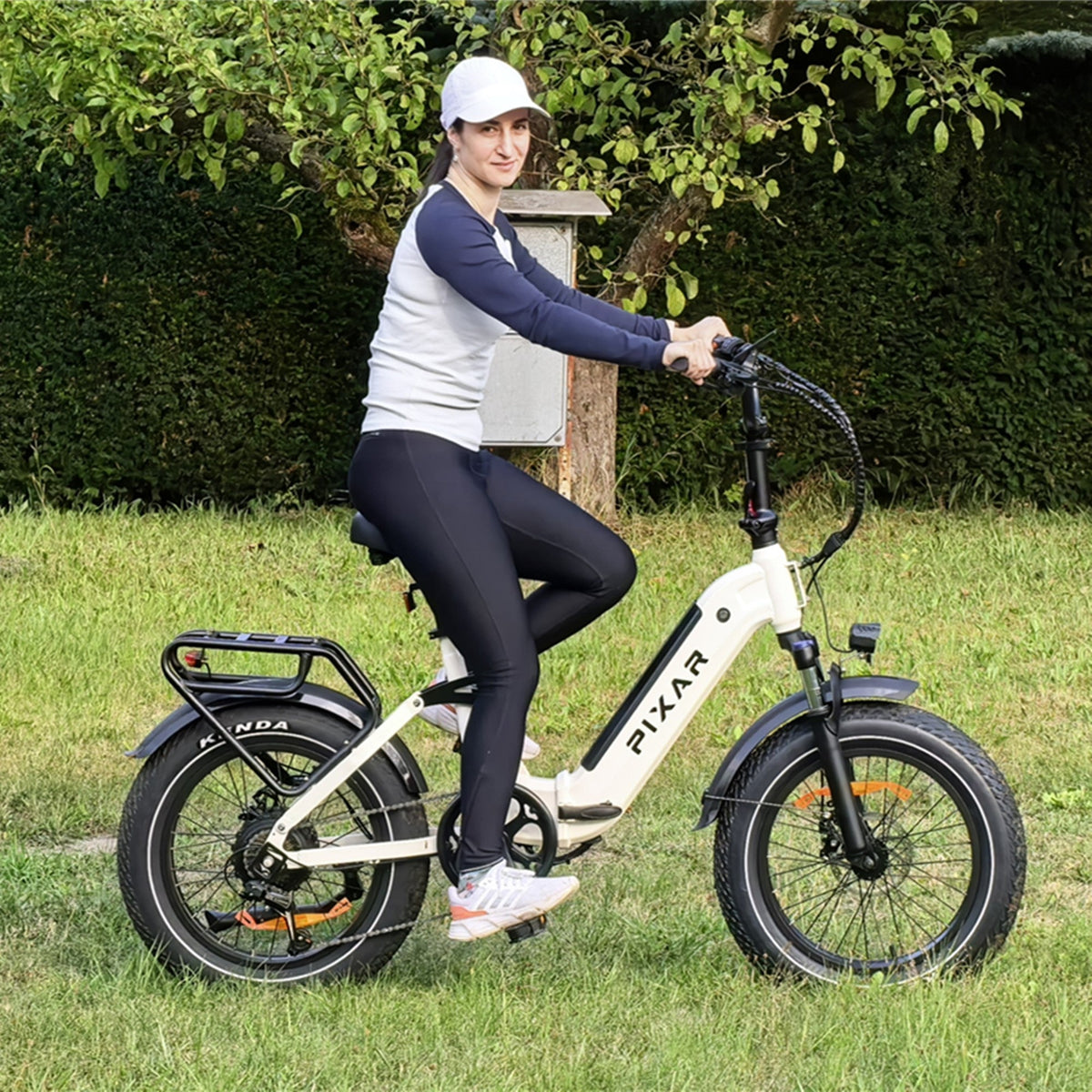


If storage is tight or you want a folding e-bike, start with 20-inch wheels. For everyday city and leisure riding, 27.5 inches is a useful all-round size. For longer journeys and rougher tracks, 29-inch wheels offer smoother rollover.
The number on the tyre only tells part of the story. Tyre width changes comfort and road feel, while the frame—not the wheel diameter—decides whether the bike fits you.
What does e-bike wheel size mean?
The familiar 20, 27.5 and 29-inch descriptions identify wheel-size families. They help when comparing complete bikes, but they do not give the exact outside diameter of every tyre.
Tyre dimensions are usually written as diameter × width. A 20 × 4-inch tyre and a 20 × 3-inch tyre use the same nominal diameter, but the 4-inch tyre is wider and has a larger air volume. Frame size is a separate measurement: saddle-height range, reach and standover clearance are better indicators of rider fit.
20 vs 27.5 vs 29-inch e-bike wheels
| Wheel size | Common strength | What to check | Typical use |
|---|---|---|---|
| 20 inch | Compact packaging and responsive handling | Tyre width, folded dimensions and complete bike weight | Folding, compact and some fat-tyre e-bikes |
| 27.5 inch | Balanced everyday handling and rollover | Frame fit, tyre width and riding position | City, leisure and mixed everyday riding |
| 29 inch | Smoother rollover and stable progress on uneven routes | Overall bike length, manoeuvring space and rider fit | Touring and longer mixed-surface rides |
Use the table to make a shortlist, then compare tyre width, frame geometry and complete bike weight. Those details explain why two e-bikes with the same wheel diameter can still handle differently.
When should you choose a 20-inch e-bike?
Twenty-inch wheels leave more room for a compact frame and folding mechanism. They also tend to feel quick to respond when starting and turning, which suits busy urban routes.
Small wheels do not make the whole bike light. If you plan to put it in a car or carry it upstairs, check both the folded dimensions and the complete weight. Our guide to electric bike weight explains why compact storage and easy lifting are separate questions.
The PIXAR Rusher combines a folding frame with 20 × 3-inch tyres. It is worth considering when reduced storage size matters but you still want the cushioning of a relatively wide tyre.

When should you choose a 27.5-inch e-bike?
For many everyday riders, 27.5 inches is the practical middle option. It rolls well over patched roads and cycle paths without requiring the space of a typical 29-inch design. That makes it a common choice for full-size city e-bikes.
The PIXAR C1 Pro uses 27.5 × 1.95-inch tyres in a step-through city format. C1 uses the same stated tyre size, while Cruiser uses 27.5 × 2-inch tyres. Because their wheel sizes are similar, battery, brakes, weight and frame features become the more useful comparison points.

When should you choose a 29-inch e-bike?
A 29-inch wheel meets a bump or shallow hole at a gentler angle than a smaller wheel. It can therefore feel calmer over uneven tracks and carry momentum well on longer routes, making it a natural fit for touring and mixed-surface riding.
A 29-inch bike is usually longer and needs more storage or transport space. Check the frame measurements as well: the wheel size does not tell you whether the reach or saddle-height range will suit you.
The PIXAR Largo pairs 29 × 2.1-inch tyres with adjustable front suspension, a torque sensor and Shimano CUES 9-speed gearing. This combination is designed around longer rides and changing surfaces rather than compact storage.

Wheel diameter and tyre width are different
Diameter identifies the wheel-size family; width describes how broad the tyre is. Comparing only the first number can hide a large difference.
Rusher and PIXAR M9 both use 20-inch wheels, but Rusher is listed with 20 × 3-inch tyres and M9 with 20 × 4-inch fat tyres. M9's larger air volume and wider footprint suit loose or uneven ground and complement its high-capacity retro format. On smooth roads, a narrower city tyre will usually feel lighter to roll.
Comfort comes from the combination of wheel diameter, tyre volume, pressure and suspension. Larger wheels roll over irregularities more gradually, while higher-volume tyres can soften smaller impacts. Use the permitted pressure range for the exact tyre and bike: too much pressure can feel harsh, while too little increases drag and the risk of damage.
Does wheel size affect battery range?
Wheel and tyre choice can influence energy use, but diameter alone does not predict range. A wide, heavily treaded tyre may create more rolling resistance than a narrower city tyre, particularly on smooth roads.
Battery capacity, assistance level, hills, speed, wind, temperature and load have to be considered too. Our guide to what affects electric bike range shows how these factors work together.
Does a smaller wheel mean the bike fits a shorter rider?
No. A 20-inch folding e-bike can use a long seatpost and adjustable handlebar, while a 27.5-inch bike can have a low step-through frame. Fit comes from the complete frame and its adjustment range.
Check the lowest and highest saddle positions, reach to the grips and brake levers, standover clearance and the manufacturer's stated rider-height guidance. If easy mounting matters, our guide to choosing a step-through e-bike explains why frame access and fit need separate checks.
How to choose the right e-bike wheel size
- Start with the route. Note whether you mainly ride smooth streets, crowded cycle paths, rough tracks or longer mixed-surface journeys.
- Check storage and transport. Measure the available space and decide whether the complete bike must fold, fit into a vehicle or be carried.
- Separate diameter from width. A 20-inch fat tyre and a 20-inch folding-bike tyre do not create the same ride or storage footprint.
- Confirm fit. Use frame measurements and adjustment ranges rather than matching wheel size directly to your height.
- Compare the complete bike. Include battery, brakes, motor response, gearing, suspension, weight and load capacity.
If no single requirement dominates, 27.5 inches is a sensible starting point for city and leisure use. Choose 20 inches when folding or compact storage solves a real problem, and 29 inches when longer routes and rougher surfaces matter more.
Replacing an e-bike tyre or wheel
If you are replacing a tyre, inner tube, rim or complete wheel, do not order a part using only the words 20, 27.5 or 29 inch.
Read the full size marked on the tyre sidewall and check the model manual or original component specification. The ETRTO marking gives the tyre width and bead-seat diameter in millimetres, making it more precise than the traditional inch label. Also confirm rim-width compatibility and clearance around the frame, fork, mudguards and brakes.
A replacement motor wheel also involves wiring, axle hardware and model-specific compatibility. Contact PIXAR support or a qualified bicycle technician if the original specification is unclear.
Which wheel size fits your journey?
Match the wheel size to the job: 20 inches for compact versatility, 27.5 inches for everyday balance, or 29 inches for longer and rougher routes. Then confirm tyre width, bike dimensions and fit.
Browse the current PIXAR electric bike range to compare 20, 27.5 and 29-inch models alongside their tyre width, dimensions, weight and intended use.
Frequently asked questions
What is the best wheel size for an electric bike?
There is no universal best size. A 20-inch wheel suits compact and folding designs, 27.5 inches is a versatile city and leisure option, and 29 inches can provide smoother rollover on longer or uneven routes. Fit and the complete bike specification matter as much as diameter.
Are 20-inch e-bike wheels too small?
No. They are suitable when compact size and responsive handling are priorities. Tyre width, frame geometry and pressure determine much of the ride, so a 20-inch fat-tyre bike can feel very different from a narrow-tyre folding bike.
Is a 29-inch e-bike faster?
Not automatically. Larger wheels can maintain momentum well, but speed also depends on rider effort, assistance settings, gearing, motor control, surface and legal assistance limits. Wheel diameter alone does not make one e-bike faster than another.
Is 27.5 or 29 inches better for an e-bike?
Choose 27.5 inches for a balanced city or everyday format where manoeuvrability matters. Consider 29 inches for longer rides and rougher surfaces where smoother rollover is valuable. Confirm fit and overall bike dimensions before deciding.
Does wheel size determine rider height?
No. Use the bike's saddle-height range, reach, standover clearance and stated fit guidance. Riders of similar height may need different setups because leg length, arm reach and preferred posture differ.
Can I fit a different wheel size to my e-bike?
Do not change wheel diameter unless the manufacturer specifically approves it. A different size can affect frame and fork clearance, brakes, handling, motor operation and the accuracy of speed readings. Use the model's specified replacement size.